The core mistake in paid social is treating it as a targeting tool instead of a system. Many teams still believe performance comes from finding the right audience and locking it down. That can work at low spend, when noise is limited and learning happens fast. Once budgets grow and competition increases, this approach breaks. Costs rise, results swing, and every adjustment seems to make things worse. The real dilemma is not tactical. You either design your account to learn under pressure, or you keep adding controls that slow it down.
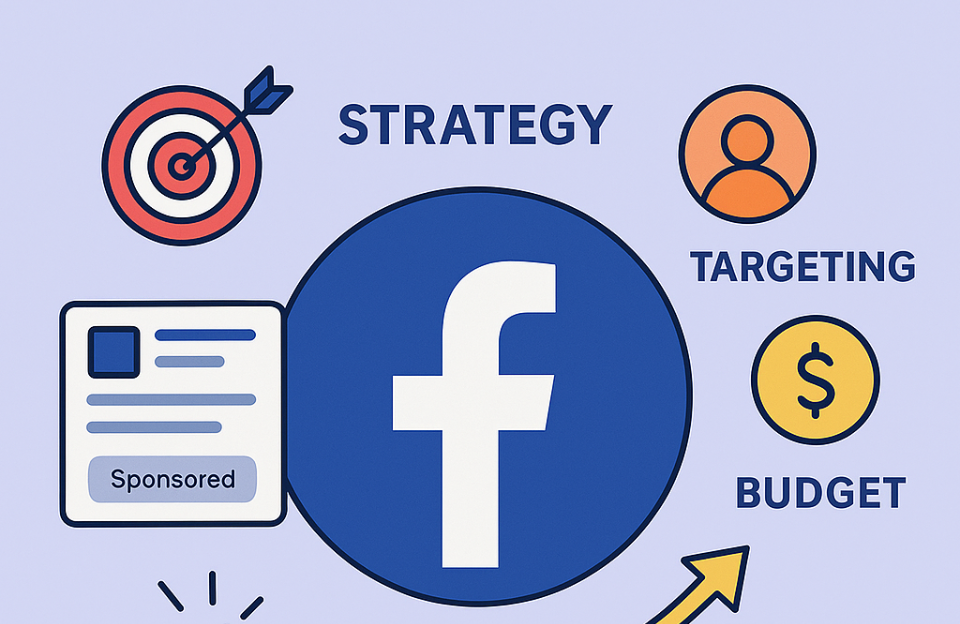
This Facebook advertising guide is written for marketers and business owners who manage real budgets and need predictable decisions. It goes beyond setup and tactics. You will see how campaign structure, targeting models, funnel design, measurement limits, tracking choices, and creative testing interact as one system. For context on the strategic role of paid social, you can first read why Facebook and Instagram advertising still matters. This guide focuses on execution choices that determine whether the channel compounds or stalls.
How Facebook Ads Really Work
Meta Ads optimize for probability, not intent. The system predicts which users are most likely to complete your chosen event. It does not wait for explicit demand, as search platforms do. This means early performance is often noisy. A slow start can signal weak data, not a weak offer. Many teams misread this and change too much too fast.
Targeting settings play a smaller role than most advertisers think. Delivery shifts based on feedback after launch. Creative, event choice, and conversion quality guide the algorithm more than interests. This is why structural decisions matter long after setup. If learning is fragmented, performance stays unstable even when spend increases.
Decision rule: Treat learning stability as the primary KPI in the first phase. Protect the event, budget, and structure long enough for the system to adapt. Short-term efficiency gains are often illusions if they reset learning.
Campaign Architecture That Scales
Simple architecture concentrates learning. Every additional campaign or ad set splits data. This reduces the number of conversions per segment and slows optimization. Accounts with many small segments often feel busy but learn very little.
Effective architecture assigns one clear role per campaign. Prospecting exists to find new buyers. Retargeting exists to convert known interest. Special campaigns only make sense when they have a clear constraint, such as launches or legal limits. Building campaigns around every audience idea creates false control.
- Rule: Only create a campaign when it has a distinct goal, event, or budget boundary.
- Limit ad sets so each can exit learning.
- Name campaigns by role and event, not by creative theme.
Targeting Models and Trade-offs
Every targeting model is a trade-off between control and adaptability. Broad targeting gives the system freedom to explore. It often scales better over time, but it requires patience and strong creative signals. Narrow targeting feels safer but caps growth and becomes fragile when performance shifts.
Lookalikes can bridge the gap when first-party data is strong and recent. They decay as customer mix changes. Interest targeting still fits early validation or restricted industries. The common mistake is assuming relevance comes from targeting. In paid social, relevance is usually created by message and timing.
- Broad: Best with steady budgets and frequent conversions.
- Lookalikes: Useful with clean, current seed data.
- Interests: Suitable for controlled tests or low volume.
Funnel Design That Protects Margins
A funnel manages risk, not psychology. Many funnels mirror how teams think customers behave. They add stages without funding them properly. Each stage then lacks data and increases cost.
A practical funnel has few stages with clear rules. Prospecting tests angles and creates volume. Mid-funnel retargeting filters for intent signals. Lower funnel captures high intent and repeat buyers. Add stages only when budget and tracking can support them.
Trade-off: Fewer stages mean faster learning and less control. More stages mean higher control but require more spend and better measurement.
Budget Allocation and Scaling Rules
Budget is a learning input. Scaling too fast forces delivery into new inventory and raises costs. Scaling too slowly hides winners and limits learning. Stable rules reduce emotional decisions.
Prospecting should receive most spend during growth. Retargeting should support conversion, not dominate budgets. Overfunded retargeting inflates short-term ROAS and hides future risk.
- Scaling rule: Increase budgets in steps that preserve CPA.
- Shift spend instead of duplicating structures.
- Reserve budget for continuous testing.
Measurement and Attribution Limits
Attribution windows are models, not truth. Privacy limits, consent loss, and cross-device behavior distort reports. Meta can underreport assisted conversions and over-credit last-touch interactions.
Use directional measurement. Compare trends across platforms and backend data. Separate optimization metrics from business outcomes. This avoids panic when reporting shifts without real revenue change.
Decision point: Define one source of truth for outcomes, then interpret platform metrics against it.
Tracking Setup: Pixel and Conversions API
Tracking quality sets your ceiling. Browser limits reduce Pixel reliability. Conversions API restores server-side signals and improves match quality. It does not fix weak funnels.
Track few, high-value events. Remove duplicates and noisy micro-events. Clean signals matter more than many signals.
- Rule: One primary event per campaign role.
- Ensure Pixel and CAPI deduplication.
- Audit consent impact before structural changes.
Creative Testing and Learning Velocity
Creatives are hypotheses. Each concept should test one angle. Mixing angles hides learning and leads to subjective decisions.
Testing speed matters because auctions change. Refresh concepts before fatigue hits results. Expand formats only after message clarity is proven.
Correction: More formats do not fix weak messages.
Optimization Frameworks That Do Not Overreact
Optimize in cycles. Constant changes reset learning. Change one variable per cycle and observe results.
Use fixed review windows and minimum data thresholds. Document hypotheses so changes become learning.
- Rule: One core change per cycle.
- Separate diagnostics from scaling.
- Track few, relevant metrics.
When Meta Ads Stop Scaling
Plateaus are usually structural. Common causes include creative exhaustion, weak signals, or over-segmentation. Many teams react by adding complexity, which worsens the issue.
Before changing structure, check fundamentals. Are new concepts entering the system? Is the primary event still firing consistently? Has budget outpaced creative supply?
Decision rule: Fix inputs before changing structure. Structure changes should be the last step, not the first reaction.
Facebook Ads vs Other Paid Channels
This comparison clarifies the role of Meta Ads in a growth mix.
| Dimension | Meta Ads | Google Ads | Other Paid Social |
|---|---|---|---|
| Demand type | Creates demand | Captures intent | Creates demand |
| Main lever | Creative and signals | Keywords and landing pages | Creative context |
| Scaling behavior | Non-linear | More linear | Platform-specific |
| Main risk | Attribution noise | CPC inflation | Limited signals |
Rule: Use Meta for demand growth and testing. Use search for efficient capture.
Common Strategic Mistakes
Most failures come from chasing control. Accounts look active but learn slowly. Teams then blame the platform.
- Stopping campaigns before learning stabilizes.
- Scaling without creative supply.
- Comparing channels on platform ROAS alone.
Example Case
An ecommerce brand relied heavily on search ads. Rising CPCs reduced margins. Meta Ads underperformed due to heavy segmentation.
The team chose consolidation and broad targeting. They rejected interest-heavy structures to protect learning speed. One purchase event guided optimization.
Key takeaways:
- Consolidation improves stability.
- Broad targeting needs creative discipline.
- Clear signals outperform complex structures.
Conclusion
Build for learning first. Control comes later. Structure, signals, and creatives must support adaptation.
This Facebook advertising guide is a decision framework. Simplify when volume is low. Add structure only when you can fund and measure it.
Frequently Asked Questions
How long should you wait before judging a campaign?
Until it exits learning and shows stable trends over a fixed window.
Is broad targeting always better?
No. It works best with volume and patience.
Which event should you optimize for?
The highest-value event you can generate consistently.
Do you still need Conversions API?
Yes, to improve signal stability under tracking limits.
How should Meta Ads be compared to Google Ads?
By incremental impact, not last-click attribution.